
Building Domestic Life That Respects the Wild Horse Inside
- Dale Moulton
- Jan 30
- 2 min read

A Practical Model for Peace, Health, and Partnership
Everything we have talked about in this series comes down to one central truth.
The domestic horse is still a wild design living in a human world.
Horses have adapted remarkably.
They tolerate confinement.
They tolerate meal feeding.
They tolerate artificial herds.
They tolerate noise, pressure, routines, and environments they did not evolve for.
But tolerance is not the same as wellbeing.
The question is not whether horses can live this way.
The question is what it costs them.
The good news is that building a better domestic life is not complicated.
It is not about perfection.
It is about alignment.
It is about respecting the wild horse inside the domestic one.
Here is the practical framework.
1. Feed the Way a Horse Was Designed to Eat
The horse was built for continuity.
More forage.
Fewer long gaps.
Fibre first.
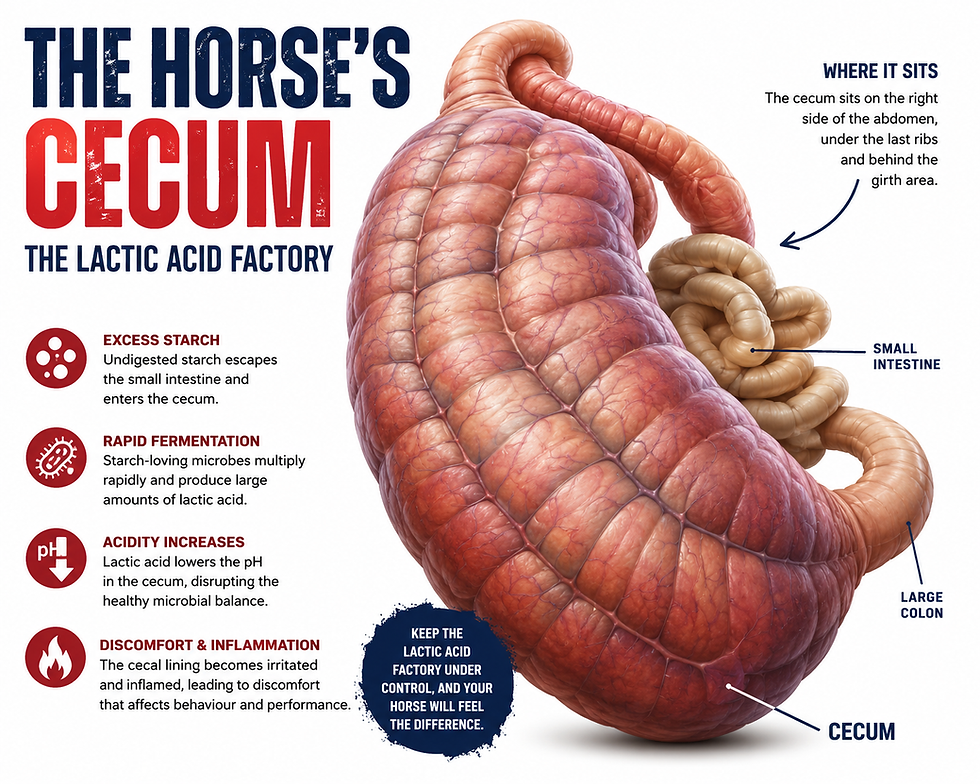
Feeding that supports the hindgut, not just the calendar.
When we honour the Hunger Clock, the horse becomes calmer from the inside out.
2. Movement Is Not Exercise, It Is Biology
A horse is not meant to stand still for most of its life.
Turnout matters.
Roaming matters.
Walking matters.
Even slow, constant movement is medicine for the gut, the feet, the joints, and the mind.
3. Social Life Is Not Optional
Horses are herd animals.
Stable companionship reduces stress.
Isolation increases vigilance.
Domestic herds must be managed thoughtfully, with space, consistency, and reduced competition.
The horse needs connection to feel safe.
4. Reduce the Background Noise of Domestication
Domestic life is full of constant stimuli.
Dogs, machinery, sudden changes, chaotic yards, unstable routines.
The prey animal never stops listening.
A calm environment is one of the greatest gifts you can give a horse.
5. Understand Behaviour as Adaptation, Not Disobedience
Cribbing, weaving, pacing, anxiety, spooking, dullness, these are not character flaws.
They are often coping strategies.
The horse is communicating the strain of adaptation.
The goal is not suppression.
The goal is resolution.
6. Training Should Create Meaning, Not Pressure
Good training substitutes for the natural life the horse no longer has.
It provides structure, clarity, confidence, and partnership.
Training should leave the horse more settled, not more tense.
7. Measure Success by Softness, Not Silence
A horse that is present is different from a horse that is shut down.
Look for:
A soft eye.
Curiosity.
Relaxed breathing.
Willing movement.
A sense of peace.
The best managed horses do not just comply.
They thrive.
The Closing Truth
The domestic horse is always adapting.
Your horse is making compromises every day to live in the world humans have built.
When we understand that, everything changes.
We stop asking, “How do I make the horse fit the system?”
And we start asking, “How do I shape the system to fit the horse?”
That is horsemanship.
That is care.
That is respect.
And when we build domestic life that honours the wild horse inside, we get something extraordinary in return.
A horse that is not just surviving.
A horse that is truly at peace.


Comments