
Mould in Hay, The Invisible Risk Every Horse Owner Must Take Seriously
- Dale Moulton
- Jan 31
- 3 min read

Hay is the foundation of the equine diet. It is the single most important feed source for almost every horse, every day, in every season. Because of that, hay quality is not a small detail, it is one of the biggest determinants of long-term health.
One of the most underestimated dangers in horse management is mould in hay. It is often invisible, sometimes odorless, and frequently dismissed as “a little dust.” In reality, mould can have serious consequences for the respiratory system, digestive health, and the overall wellbeing of the horse.
Understanding mould, learning how to detect it, and knowing what to do about it is essential for every responsible horse owner.
What Causes Mould in Hay?
Mould develops when hay is baled or stored with excess moisture. The ideal moisture content for safe baling is generally below 15 percent. When hay is baled too wet, microbial activity begins inside the bale, creating heat and the perfect environment for fungal growth.
Common causes include:
Hay baled before it is fully cured
Rain exposure during drying
Poor airflow in storage
Ground moisture wicking into stacked bales
Condensation in humid barns
Mould is not a sign of bad intentions, it is usually a sign that conditions were wrong somewhere in the harvest or storage process.
Why Mouldy Hay Is Dangerous for Horses
Horses are uniquely sensitive to airborne spores and fungal toxins. Unlike some livestock species, horses have a highly reactive respiratory system and a hindgut that depends on stable microbial balance.
Mouldy hay can lead to several serious problems.
1. Respiratory Disease
Mould spores are easily inhaled. Over time, they inflame the airways and can trigger chronic respiratory conditions such as equine asthma (commonly called heaves).
Signs include:
Coughing, especially when eating
Nasal discharge
Increased breathing effort
Reduced stamina
For sensitive horses, even small exposure can matter.
2. Digestive Disruption
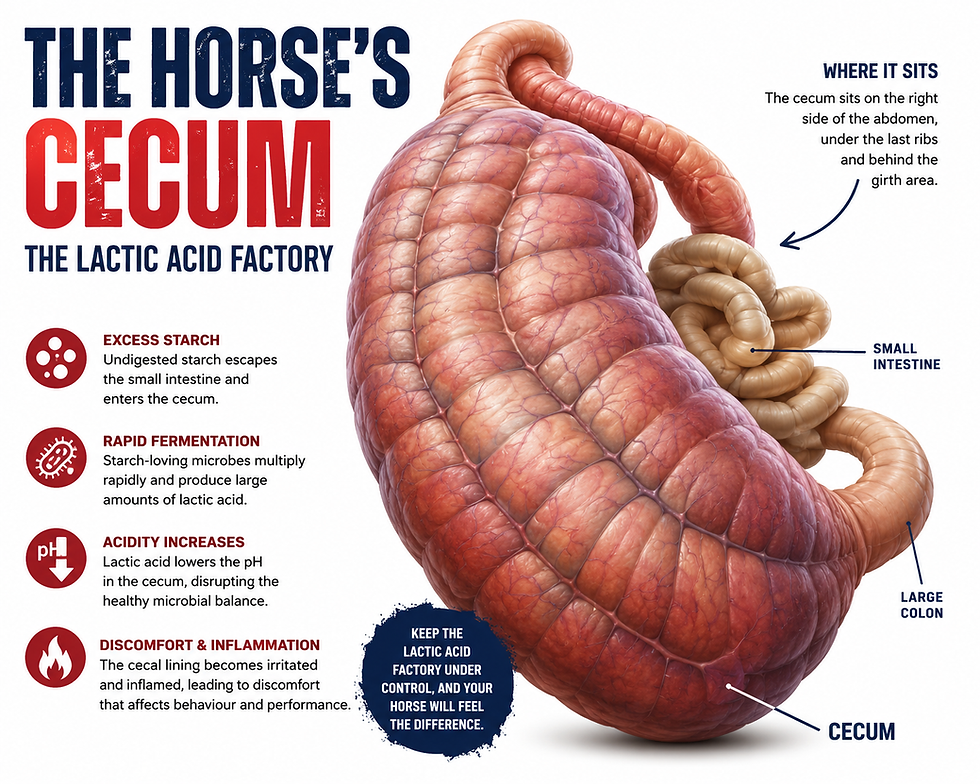
Mould does not just affect the lungs, it affects the gut. Ingesting mouldy forage can irritate the digestive lining and disturb hindgut fermentation.
Possible outcomes include:
Loose manure
Colic risk
Poor feed utilization
Weight loss despite adequate intake
3. Mycotoxin Exposure
Some moulds produce mycotoxins, which are biologically active compounds that can stress the liver, immune system, and nervous system.
Severe exposure can contribute to:
Lethargy
Immune suppression
Unexplained poor performance
Neurologic signs in extreme cases
This is rare, but it is real, and it is preventable.
How to Recognize Mould in Hay
Not all mould is obvious. Horse owners should use a multi-sensory inspection method every time a bale is opened.
Look for:
Grey, white, or black patches
Excessive dust clouds when shaken
Clumping or damp areas inside the bale
A musty or sour odor
Heat damage or darkened hay
Horses refusing to eat it
One of the most important points is this, horses often know before we do. Refusal is not fussiness, it is instinct.
Can You “Fix” Mouldy Hay?
This is a hard truth.
Soaking or steaming hay may reduce dust, but it does not reliably remove mycotoxins, and it does not make unsafe hay safe.
If hay is truly mouldy, the safest choice is disposal, not compromise.
The cost of replacing hay is always less than the cost of respiratory disease or a colic emergency.
Prevention, The Best Strategy
Good hay management is proactive.
Key practices include:
Buy from reputable growers with consistent curing practices
Store hay off the ground on pallets
Maintain airflow around stacks
Never store hay in sealed humid spaces
Inspect each new load carefully
Rotate inventory so old hay does not sit too long
If you are ever in doubt, err on the side of caution.
Where Thrive Feed Fits Into the Bigger Picture
At Thrive Feed, we believe feeding horses is not about shortcuts, it is about protecting the digestive system and supporting the horse’s natural design.
No concentrate or supplement can compensate for poor forage quality. The foundation must always be clean, safe, high-integrity roughage.
Our mission is to help horse owners build feeding programs that respect the biology of the horse, starting with the basics, hay, water, and digestive stability.
Final Thought
Mould in hay is one of the most preventable health threats in horse ownership, but only if it is taken seriously.
Trust your senses, trust your horse’s instincts, and never normalize “a little mould.”
Good horses deserve good forage.


Comments