
The Gut Is the Foundation of Performance
- Dale Moulton
- Feb 8
- 2 min read

Updated: Feb 21
If energy already exists within the horse, then the first place to look is not the muscle.
It is the gut.
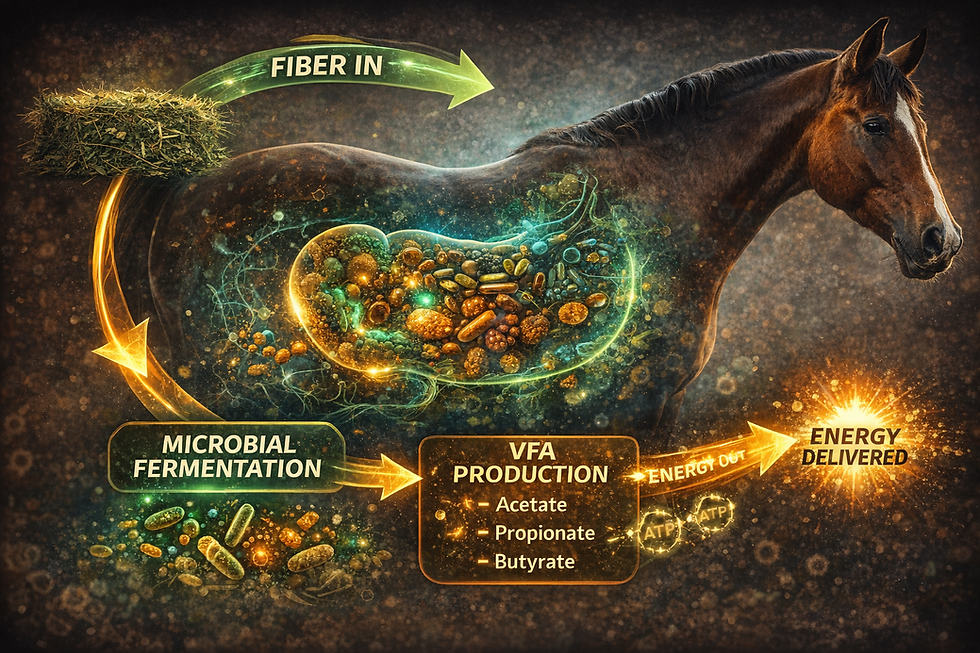
The horse is a hindgut fermenter. That is not trivia. It is the central design feature of the species. Roughly sixty percent of its digestive capacity is behind the small intestine, in the cecum and large colon, where microbial fermentation converts fibre into volatile fatty acids. Those fatty acids provide a steady, sustainable energy source.
When fermentation is stable, energy is stable.
When fermentation is disrupted, performance becomes unpredictable.
Practical Suppressors of Gut Driven Energy
Energy is often suppressed long before it reaches muscle tissue.
In practical terms, look at these areas:
Forage quality and consistency
Horses are designed for continuous intake. Large gaps between forage meals create acid accumulation and stress responses. Inconsistent hay quality alters microbial populations. Performance begins to fluctuate.
Abrupt feed changes
Microbes adapt slowly. Rapid dietary shifts destabilise fermentation and create transient inefficiencies that show up as dullness, irritability, or poor recovery.
Excessive starch loading
High starch intake that escapes small intestinal digestion spills into the hindgut. That alters pH, shifts microbial balance, and can create low grade inflammation. The result is not more energy. It is volatility.
Water intake
Fermentation requires fluid balance. Subtle dehydration reduces efficiency long before a horse appears clinically dehydrated.
Mineral imbalance
Microbial populations rely on trace minerals as cofactors. Copper, zinc, iron balance, and electrolyte status all influence digestive stability.
What Supporting the Gut Actually Looks Like
Supporting performance through the gut does not require exotic ingredients. It requires discipline.
Constant access to appropriate forage.
Gradual transitions between feeds.
Respect for fibre as the primary energy source.
Measured, not excessive, concentrate inclusion.
Attention to hydration and electrolyte balance.
When the hindgut environment is stable, the horse’s natural survival design can express itself without interference.
The goal is not to stimulate energy.
The goal is to stop destabilising it.
Comments