
The Horse’s Amazing Ability to Recover


One of the greatest things I have witnessed in a lifetime around horses is their ability to recover when the right conditions are finally provided. Not just survive, not just improve a little, but transform in ways that many people would think impossible.
I have seen horses arrive in a body condition score below one, depleted, weak, and carrying the look of an animal that has been running on empty for far too long. Then, within a matter of weeks, they stand there in remarkable condition, healthy, bright, and strong enough to turn heads anywhere they go.
That is not magic. It is biology, when biology is finally respected.
Horses Were Built for Cycles
Many owners have been taught to keep horses in polished, peak-looking condition every month of the year. Always full, always round, always pristine. It may look impressive, but it can work against the natural rhythm of the horse.
Historically, horses moved through seasonal cycles. Leaner periods, richer periods, changing forage quality, more movement, less abundance, then renewal. The body evolved within those rhythms.
A horse carrying optimum condition through winter can arrive at spring already metabolically loaded. Then comes rich pasture, increased intake, and higher sugar availability. From there, the road often leads in the wrong direction, there's nowhere to go but obesity. The point is that natural variation and appropriate condition matter more than maintaining an artificial showroom look all year.
Recovery Starts in the Gut
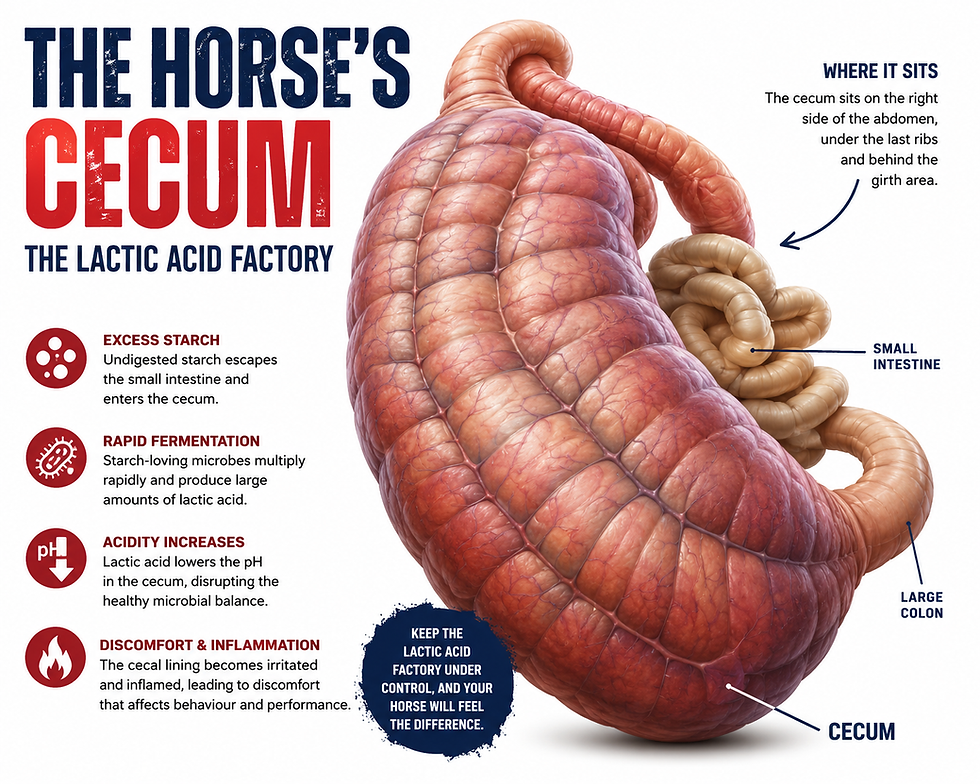
When a badly run-down horse begins to recover, owners often focus only on calories. More feed, more weight, more supplements. But recovery is not simply about volume. It is about what the horse can digest, absorb, and use. That is why the digestive foundation matters so much.
When the hindgut is supported properly, fibre can be fermented more effectively and the horse gains access to a steady source of usable energy through natural, powerful microbial activity. When the small intestine is supplied with digestible nutrients, including a quality amino acid supply, the body has the raw materials it needs to rebuild, leaving energy production to the hindgut.
This is where many programs fail. They chase bulk intake while ignoring function.
Why Protein Matters More Than People Realise
Protein is not just about muscle. It provides building blocks for tissue repair, topline, hoof quality, enzymes, immune function, skin, coat, and countless processes involved in restoration. But the body is pragmatic. If energy is lacking elsewhere, it will prioritise survival.
When digestive energy supply is compromised, the horse may begin diverting amino acids toward energy production instead of repair and regrowth. In simple terms, resources that could have rebuilt the horse are burned to keep the lights on.
That is a costly trade.
Support energy appropriately, and protein can do the job it was meant to do.
The Speed of Recovery Can Surprise People
Given the right inputs, horses can change fast. Eyes brighten. Appetite steadies. Manure improves. Coat quality lifts. Muscle begins returning. Attitude softens. Strength comes back. The horse starts looking like itself again, or perhaps like it never had the chance to before.
People often underestimate how much improvement is possible because they have only seen horses managed within limitations.
Change the system, and the horse often changes with it.
A Word of Balance
This is not an argument for starving horses in winter or allowing unhealthy loss of condition. It is not a call for extremes. It is a call for understanding.
There is a difference between natural seasonal variation and chronic neglect. There is a difference between thoughtful management and over-conditioning. There is a difference
between feeding more and feeding better.
Final Thought
The horse’s ability to recover is one of nature’s most impressive reminders that decline is not always permanent. Sometimes what looks broken is simply under-supported.
Respect the hindgut. Supply usable nutrition. Understand seasonal biology. Remove unnecessary stressors.
Do that, and the transformation can be extraordinary.


Comments