
Why Some Horses Never Truly Bloom


There are horses that shine from the inside out. Their coat has life, their eye is soft and bright, their body carries healthy shape, and they move through the day with a settled confidence. Then there are horses that seem to sit in another category entirely. They are not in crisis, not obviously sick, and not always thin, yet they never quite look or feel right. They are maintained, but they do not truly bloom.
This is one of the most common and misunderstood patterns in horse ownership. Many people assume that if a horse is eating, holding weight, and getting through the week, everything must be fine. But survival and thriving are not the same thing.
Maintained Is Not the Same as Well
A horse can be fed every day, rugged in winter, wormed, vaccinated, and still fail to reach its potential. The signs are often subtle. A dull coat, inconsistent manure, low energy, poor topline, tension under saddle, mood changes, fussy appetite, slow recovery after work, or a general sense that the horse is never quite comfortable in itself.
These horses are often described as “just the way he is” or “hard to keep right.” In reality, many are living with a combination of low-grade stressors that gradually become normalised.
The Digestive System Is Often Central
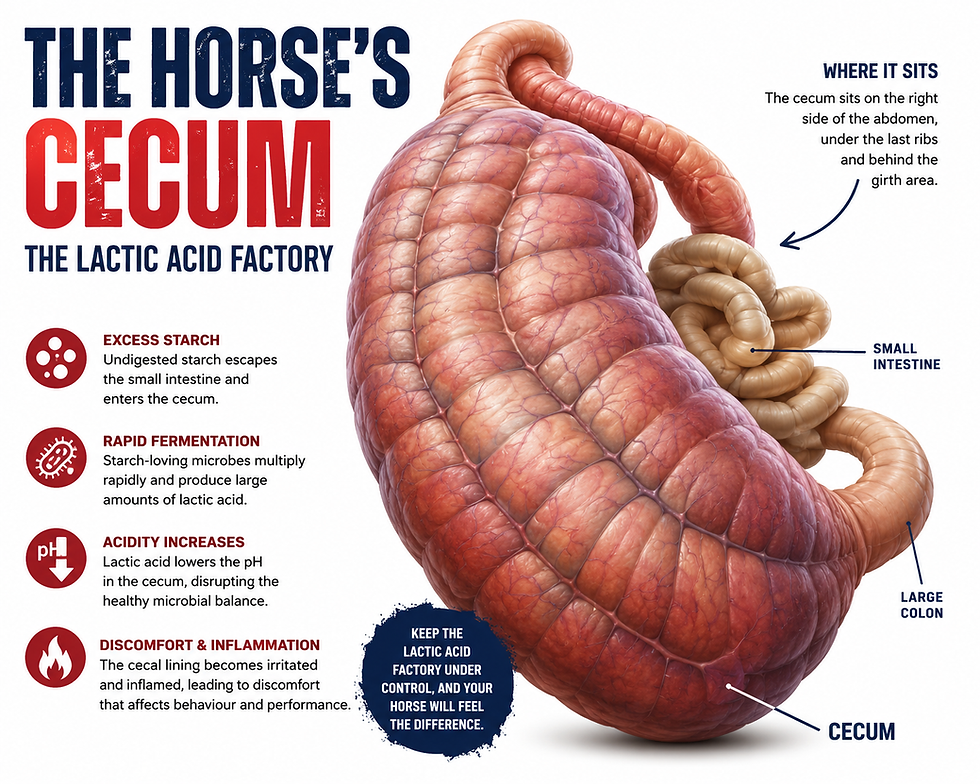
The horse was designed to graze, move, chew, and process fibre continuously. Modern life often asks for the opposite. Bigger meals, richer feeds, long periods standing still, social disruption, travel, confinement, inconsistent routines, and feeds that do not suit the horse’s digestive design can all add pressure.
When digestion is not working efficiently, the horse may still eat plenty, yet fail to fully utilise what is consumed. Owners often respond by adding more feed, more supplements, or another product, while the real issue remains unresolved.
It is not always about how much goes in. It is often about how much the horse can comfortably and effectively use.
Stress Leaves a Signature
Stress in horses is not always dramatic. It can be as simple as isolation from other horses, unstable herd dynamics, pain, too little turnout, excessive stabling, irregular feeding times, poor sleep, or a management system that does not suit the individual.
Some horses internalise stress quietly. They do not explode. They simply stop flourishing.
The body then diverts resources toward coping rather than thriving. Condition can stall. Behaviour can change. Immunity can soften. Recovery can slow. The horse appears flat.
Weight Can Be Misleading
Many owners use bodyweight as the main indicator of health. While weight matters, it is only one measure. A horse can be round yet metabolically strained, tight in the body, dull in the eye, and uncomfortable in the gut. Another may be leaner, but bright, strong, engaged, and functioning well.
Condition score matters, but it does not tell the whole story.
What Bloom Often Looks Like
When a horse begins to truly improve, owners commonly notice the same things. The coat changes first. The eye softens. Appetite becomes calmer and more consistent. Manure improves. The horse becomes more settled to handle and ride. Recovery after work lifts. Muscle starts to return. There is a different feel to the horse.
Not just heavier. Better.
Ask Better Questions
If your horse has never quite looked the way you hoped, consider asking different questions.
Is the diet being well utilised, or simply consumed?
Is the feeding style aligned with natural function?
Is the horse carrying hidden stress?
Is pain involved?
Is routine helping or hurting?
Are you treating symptoms while missing the cause?
Those questions often lead further than simply buying another bag.
Final Thought
Some horses do not fail to bloom because they are difficult, faulty, or old. They fail to bloom because the system around them is not yet meeting what they truly need.
Change the inputs, reduce the stressors, respect the design of the horse, and the transformation can be remarkable.
Sometimes the horse you hoped for has been there all along, waiting for the right conditions to appear.


Comments