
Your Horse Is Not Giving You a Hard Time, Your Horse Is Having a Hard Time
- Dale Moulton
- Jan 25
- 2 min read

There is a simple sentence that can change horsemanship forever:
Your horse is not giving you a hard time.
Your horse is having a hard time.
So many struggles between horses and humans come from misinterpretation.
We assume defiance.
The horse is experiencing difficulty.
Horses Do Not Misbehave Like Humans
A horse does not wake up planning to be difficult.
It does not plot resistance.
It does not try to ruin your day.
Horses respond.
They cope.
They communicate through behaviour because they cannot speak through words.
Behaviour Is Often the First Language of Stress
When a horse refuses, spooks, pins ears, or becomes reactive, it is often expressing burden:
Pain
Fatigue
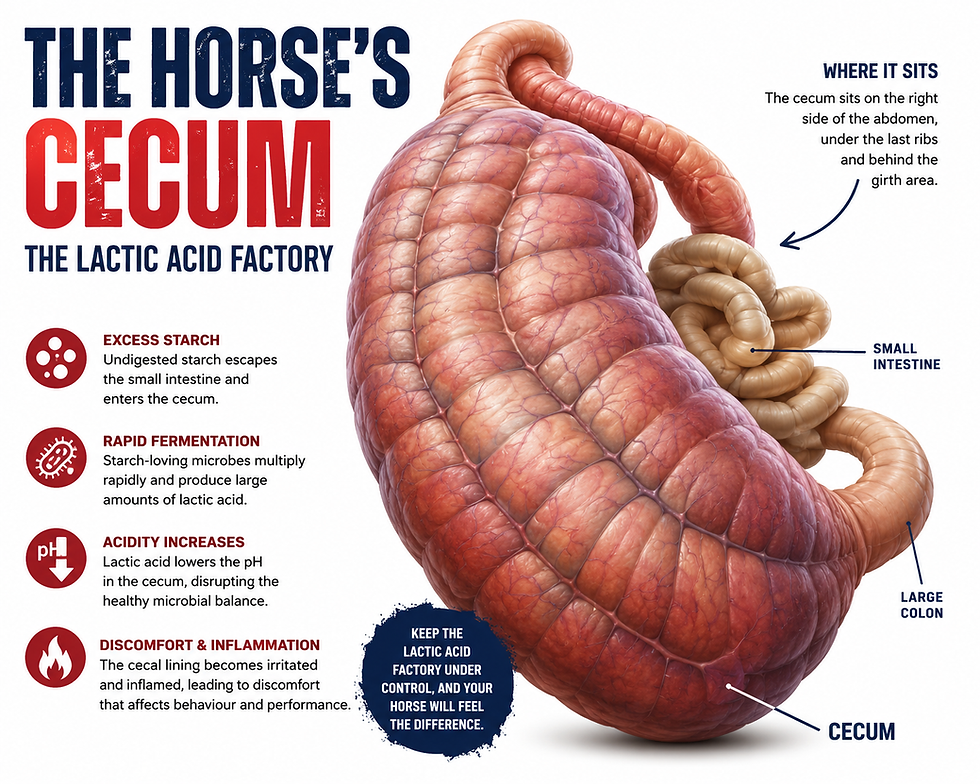
Digestive discomfort
Confusion
Fear
Overwhelm
Environmental stress
The horse is not challenging you.
The horse is signalling.
The Hardest Horses Are Often the Most Loaded
Many of the horses labelled as stubborn, grumpy, or naughty are simply horses carrying too much.
A sore horse becomes guarded.
A stressed horse becomes reactive.
A horse with digestive instability becomes unsettled.
A horse with no clarity becomes resistant.
The horse is not being bad.
The horse is struggling.
Compassion Is Not Softness, It Is Accuracy
Compassion in horsemanship is not indulgence.
It is precision.
It is seeing the truth instead of the label.
Instead of asking:
“How do I make this horse behave?”
The better question is:
“What is my horse trying to tell me?”
That question changes everything.
Horses Thrive When They Feel Understood
When the burden is reduced, when comfort is restored, when the horse feels safe, behaviour often resolves naturally.
Not through force.
Through support.
Through listening.
Through returning the horse to calm function.
Final Thought
Your horse is not giving you a hard time.
Your horse is having a hard time.
When you stop taking behaviour personally, you start seeing the horse clearly.
And when the horse feels seen, trust begins.
Because horsemanship is not control.
Horsemanship is understanding.


Comments