
Laminitis, Stress Physiology, Cortisol, and Why Metabolic Pressure Matters
- Dale Moulton
- Jan 25
- 3 min read

Laminitis is one of the most feared conditions in horse ownership, and for good reason.
It is painful, complex, and often misunderstood.
While laminitis can have multiple triggers, one of the most important modern realities is that many cases are linked to metabolic and stress-related physiology rather than simple “bad luck.”
To understand laminitis properly, we must understand what happens when the horse’s internal systems are placed under chronic pressure.
Stress Is Not Just Emotional, It Is Hormonal
When a horse experiences stress, whether from pain, confinement, dietary disruption, illness, or environmental strain, the body responds through a hormonal cascade.
One of the central hormones involved is cortisol.
Cortisol is not a villain, it is a normal survival hormone.
Its purpose is to mobilise energy and keep the animal functioning under challenge.
But when stress becomes chronic, cortisol signalling can become part of a broader metabolic burden.
Blood Glucose, Energy in the Wrong Context
Glucose is essential. It is a fuel.
But in excess, or in horses with impaired metabolic flexibility, glucose becomes a problem of abundance rather than necessity.
A useful analogy is this:
Blood glucose is like having fuel in your veins, powerful, necessary, but biologically demanding to regulate.
In metabolically vulnerable horses, repeated surges of glucose and insulin signalling can place strain on tissues throughout the body.
This is one reason metabolic dysfunction is so closely watched in laminitis-prone horses.
The Hoof Capsule Is a Confined Space
The laminae are delicate structures within the hoof capsule that help suspend and support the coffin bone.
The hoof is not an open organ. It is a rigid capsule.
When inflammatory processes, vascular changes, or tissue stress occur inside that confined space, the result can be severe discomfort and mechanical compromise.
In simple terms:
The hoof does not have room for swelling.
That is part of what makes laminitis so devastating.
Hindgut Disruption and the Microbial Factor
Another important component in equine metabolic stress is hindgut stability.
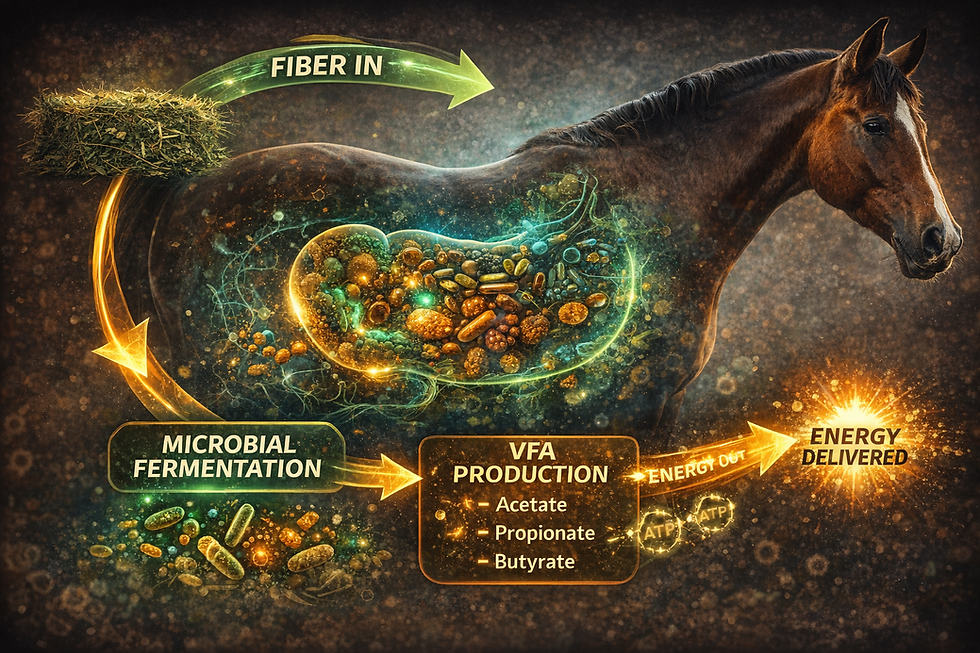
The horse’s hindgut is a fermentation chamber, and it relies on a balanced microbial environment.
When large amounts of rapidly fermentable material enter the hindgut, microbial populations can shift abruptly.
In those situations, some bacteria may die off, and fermentation byproducts may change.
These shifts can increase the burden of inflammatory compounds in the system.
This is not a simplistic cause-and-effect claim, but it is one reason why digestive stability is considered foundational in overall equine wellbeing.
Modern Horses Live Under Modern Pressures
In nature, horses did not have access to rich pasture surges, sweet feeds, intermittent meal loading, and confined movement patterns.
Many of the metabolic pressures linked with laminitis risk are products of domestication, not evolution.
That is why modern management places so much emphasis on:
Forage consistency
Avoiding extreme dietary swings
Supporting calm digestive function
Reducing chronic stress and discomfort
Maintaining healthy body condition
A Calm System Is a Safer System
The central principle is simple:
Laminitis risk is often connected to systemic strain.
Stress hormones, metabolic overload, inflammatory burden, and digestive disruption can overlap, especially in vulnerable horses.
This is not about blaming owners.
It is about respecting biology.
Final Thought
Laminitis is not a single-cause condition, and every case requires qualified veterinary involvement.
But understanding the roles of stress physiology, cortisol signalling, metabolic pressure, and hindgut stability helps horse owners think more clearly about why laminitis has become so common in the modern world.
Healthy horses thrive on consistency, calm function, and evolution-aligned management.
The closer we return the horse to its natural baseline, the more resilient the whole system becomes.

Comments