
The Quiet Cost of Chronic Inflammation.

Inflammation is one of the most misunderstood forces in modern equine health.
People often think of inflammation as swelling after an injury.
A cut.
A strain.
A visible event.
But the more common problem in domestic horses is not dramatic inflammation.
It is chronic, low-grade, systemic inflammation.
Quiet.
Persistent.
Costly.
Inflammation Is a Burden, Not a Crisis
A horse can carry inflammation for months or years without obvious outward signs.
It does not always limp.
It does not always show sickness.
Instead, the horse simply becomes less itself.
Less comfortable.
Less resilient.
Less tolerant.
Inflammation is often the background load that changes everything slowly.
Modern Horses Live Under Modern Inflammatory Pressures
In nature, horses lived with:
Steady forage intake
Constant movement
Lower sugar exposure
Predictable rhythms
Modern domestic life introduces pressures that increase inflammatory burden:
Rich pasture surges
High-starch feeding patterns
Confinement and reduced movement
Chronic low-level stress
Mechanical soreness from imbalance
Inconsistent routines
The horse has not changed.
The load has changed.
Inflammation Shows Up as Subtle Decline
Many owners never hear the word inflammation, but they see the results:
A horse that is more reactive
A horse that is harder to keep weight stable
A horse that feels stiff before it feels lame
A horse that becomes grumpy to handle
A horse that loses that soft ease it once had
These are not personality shifts.
They are often physiological strain.
The Gut Is Often Involved
Digestive stability is central.
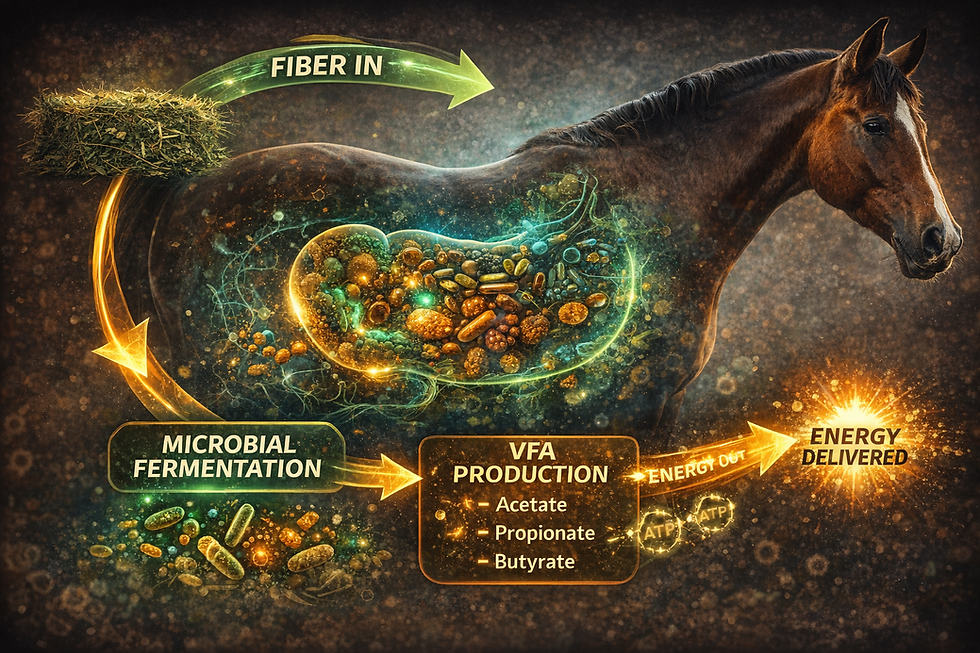
Hindgut disruption, inconsistent fermentation, or dietary mismatch can contribute to systemic stress signals.
The gut is not separate from the body.
A stressed gut creates a stressed horse.
Inflammation often begins where digestion becomes unstable.
Pain and Inflammation Travel Together
Older horses are a clear example.
Age itself is not the enemy.
Discomfort and inflammatory load are.
Pain creates stress.
Stress increases metabolic demand.
The horse becomes loaded from the inside out.
Managing comfort often restores the horse far more than changing life-stage formulas ever will.
Calm Function Is the Opposite of Inflammation
The goal is not to chase complexity.
The goal is to reduce burden.
Consistency.
Forage rhythm.
Digestive calm.
Appropriate movement.
Thoughtful care.
When systemic strain is reduced, horses often become more themselves again.
Final Thought
Chronic inflammation is the quiet cost of the modern horse world.
It rarely announces itself.
It accumulates.
And it changes everything, movement, temperament, resilience, and comfort.
The closer we return the horse to its natural baseline, the more the system can breathe.
Because horses have not changed.
Only the burdens we place on them have changed.

Comments