
The Rhythm of the Horse: Why Modern Feeding Disrupts Nature (And the Science Behind the Balance)


For years, horse owners have been faced with a common frustration. When a horse becomes explosive, spooky, or difficult to train, it is often treated strictly as a "behavioural issue." When a horse struggles with maintaining a healthy weight or experiences sudden physical sensitivity, we are told it is just bad luck or irreversible genetics.
We look at these challenges through a different lens: the lens of a 50-million-year-old intelligent evolutionary design.
By stepping out of the way and letting a horse’s natural digestive biology function the way nature intended, we have witnessed beautiful, lasting transformations in horses that people had otherwise given up on. The secret isn't in a magic chemical cure; it is in understanding the profound connection between the equine gut, the brain, and the changing seasons.
1. The Gut-Brain Connection: Starch and the Stress Response
While conventional approaches often separate a horse's digestion from their mental focus, the two are deeply intertwined through what is known as the gut-brain axis.
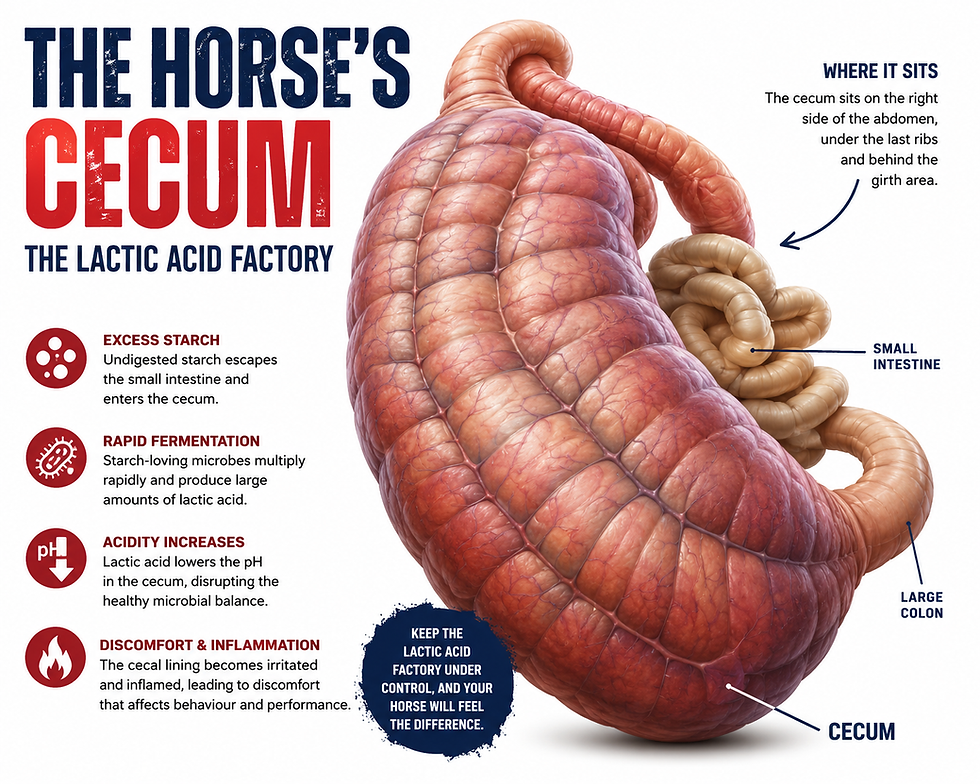
Traditional horse pelleted/textured horse feeds are frequently loaded with raw, starch-based grain concentrates. A horse’s small intestine has a very limited capacity for processing these heavy, non water soluble raw starches. When that limit is exceeded, it creates a starch spillover directly into the cecum (the hindgut).
This raw starch ferments, and alters the delicate microbial balance of the hindgut, disrupting the natural pro energy creative bacterial environment. As the beneficial, fiber-digesting (cellulolytic) bacteria are suppressed, the digestive tract sends continuous neural distress signals up the vagus nerve directly to the brain.
This is where neurobiology dictates behavior. The hippocampus, the region of the brain responsible for mood, memory, and cognitive processing, is incredibly rich in cortisol (stress hormone) receptors. When the hindgut is under continuous digestive stress, the body naturally releases higher baselines of cortisol (stress response hormone). This surge floods the hippocampal receptors, leading to noticeable behavioural shifts:
Decreased Focus: The horse's ability to calmly process new inputs and retain training steps is compromised.
Elevated Reactivity: Without a calm neurological buffer, the horse is locked in an anxious, hyper-reactive state, often leading to unpredictable or explosive "spooks" under saddle.
When we replace raw starch with gelatinised (water soluble) starch, we substantially limit that cecal spillover. The hindgut maintains its optimal, natural balance. The cellulolytic bacteria dominate the microbiome, cleanly fermenting structural fiber into Volatile Fatty Acids (VFAs), acetate, butyrate, and propionate. These VFAs provide a steady, slow-burning perfect, powerful equine fuel source. (evolutionary dictates in feral horses, only allowed the strongest fast horses to join the gene pool. slow horses got predated upon. Natural selection is brutal but necessary for the ongoing improvement and strength of the herd.
With the digestive distress resolved, the baseline stress hormones recede, allowing the horse to return to a calm, thinking, and highly cooperative mental space.
2. The Great Winter Illusion: The Necessity of Seasonal Shifts
Another foundational truth of equine health that modern management often ignores is the natural rhythm of seasonal weight cycles.
In a wild state, horses live in strict rhythm with the seasons. Their bodies are designed to adapt to changing forage availability across the year: Late Winter, forage naturally becomes scarce and low in nutrients. Wild horses burn through their stored fat, naturally arriving at the end of winter at their leanest. This natural, leaner state is a vital biological "reset" for their metabolism and cellular sensitivity.
Spring Arrival: When lush spring grasses emerge, the horse's body is at a natural deficit. They can safely utilize those rich spring calories to rebuild depleted muscle and tissue, returning to a healthy summer weight without overloading their system. "Modern" horse management however, has effectively "eliminated winter." We blanket, stall, and grain horses year-round to maintain an artificial, heavy condition throughout the coldest months.
This creates an unnatural metabolic bottleneck. When a horse ends the winter already carrying significant fat stores and "ideal weight", then hits the rich spring pastures, the body has nowhere to put those excess calories except into unhealthy, excessive weight gain.
3. Supporting Metabolic Flexibility
Excessive, year-round fat accumulation, especially subcutaneous fat across the neck, tailhead, and shoulders, is not just passive storage. In mammalian biology, excess adipose tissue acts as a highly active hormonal trigger. This imbalance can disrupt normal insulin signalling and lead to systemic sensitivities, particularly affecting the delicate vascular structures within the horse's hooves.
This is why at Thrive Feed, we actively advocate using our product part-yearly, making it very economical! We want your horses to align with their evolutionary design. Allowing your horses to safely and naturally lean out as winter closes ensures that when the spring flush arrives, their bodies are metabolically prepared to process those rich nutrients exactly as nature intended.
Aligning with Evolutionary Design
You cannot outsmart millions of years of evolutionary biology with modern convenience. By removing raw starch, supporting a healthy hindgut microbiome, and honouring the natural seasonal cycles of the horse, we don't change the horse, we simply allow their body and mind to function at their natural, optimum performance potential.
Let the results speak for themselves. A balanced gut creates a balanced horse, every single time.


Comments