
Why Blanketing Is Not a Substitute for Hindgut Warmth

Blankets have become a normal part of modern horse care.
And they can absolutely be useful.
They protect from wind.
They reduce rain chill.
They help certain horses conserve body heat.
But there is a deeper truth that is often missed:
Blanketing is not a substitute for hindgut warmth.
Because horses are not warmed primarily from the outside.
They are warmed from within.
The Horse’s True Heater Is Internal
Horses are hindgut fermenters.
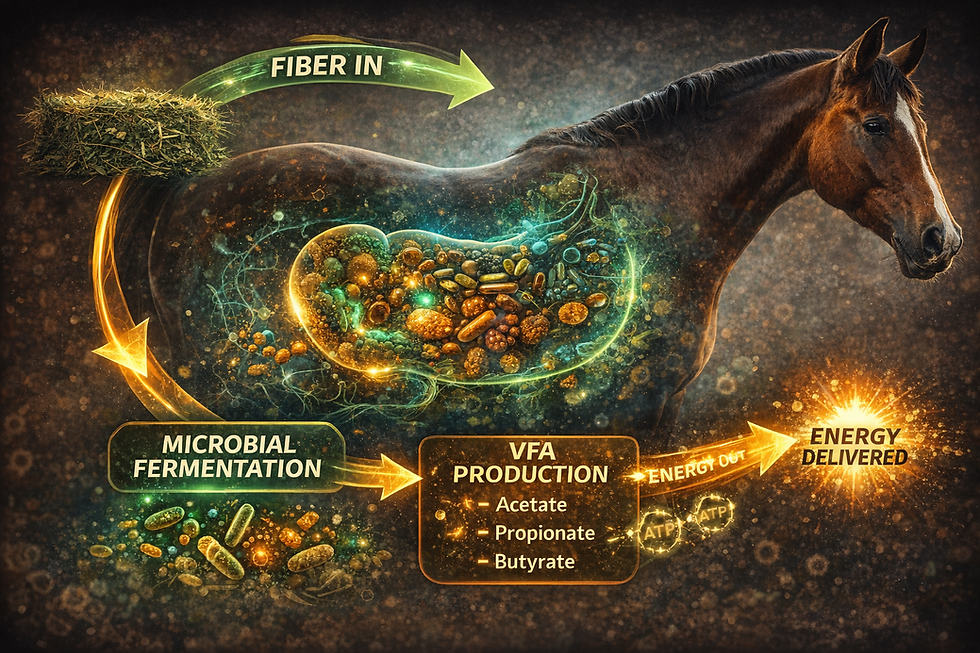
Their caecum and large colon function as fermentation chambers, extracting energy from fibre.
That fermentation produces heat.
This is one of the horse’s primary internal warming mechanisms, especially in winter.
The horse was designed to be heated from the inside out.
External Warmth and Internal Warmth Are Not the Same
A blanket can reduce heat loss.
But it cannot create the internal metabolic warmth that comes from fermentation.
A blanketed horse with inadequate fibre rhythm can still be cold internally.
Warmth is not just skin temperature.
Warmth is whole-body metabolic stability.
Winter Feeding Is Part of Thermoregulation
In nature, winter forage is tougher and more fibrous.
The horse holds it longer.
Ferments it longer.
Produces more internal heat.
That is seasonal biology.
If winter feeding becomes too concentrated and too “spring-like,” the hindgut may not be supported in the same way.
Fibre is not just nutrition.
Fibre is thermoregulation.
Blankets Should Support, Not Replace Biology
Blankets are a tool.
They are not the foundation.
The foundation remains:
Fibre intake
Fermentation warmth
Movement
Shelter from wind
Seasonally appropriate management
The horse’s internal design still matters.
The Shivering Horse Is Often a Management Signal
When horses shiver, owners often add another blanket.
But sometimes the better question is:
Is this horse generating enough internal warmth?
Is fibre intake steady?
Is forage appropriate for the season?
Is this horse relying on biology, or only on fabric?
Final Thought
Blanketing has its place.
But the horse’s true winter warmth begins in the hindgut.
Fermentation is the internal heater nature gave the horse.
Blankets can protect the outside.
Fibre supports the inside.
And horses have always been warmed from within.
Because horses have not changed.
Only modern management has changed.
Our responsibility is to use tools wisely, without forgetting the biology underneath.

Comments